
Ottawa VINE Coverage Boundaries
VINELink can present current-custody and recently released records supplied by participating agencies. Retention, event types, and notification channels vary by state and facility. Kansas availability does not establish that every Ottawa County Detention Center or Mitchell County Jail event enters the system. Check the live record’s supplying agency before relying on it.
Ottawa County’s custody geography makes that agency field vital. County minutes from April 2024 said Ottawa continued short-term booking and transport while longer-term local prisoners were primarily placed in Mitchell County. A person can leave Ottawa’s building but remain confined in Beloit. VINE may display an event from one supplying agency while the next custodian has a different record.
Federal inmates are not in VINE. Use the Federal Bureau of Prisons locator for a sentenced federal prisoner and the responsible federal court or U.S. Marshals office for a pretrial case. Immigration custody uses ICE’s locator. KASPER is the separate Kansas Department of Corrections record for state inmates, parole, postrelease supervision, and discharge.
Search an Ottawa Inmate on VINE
Begin at VINELink’s state selector and choose Kansas. Select the option to search for someone. The current official support material describes name, ID number, or case number searches and optional photo display. An unsigned user may have to complete a CAPTCHA. Controls can change, so follow the live Kansas interface rather than expecting a fixed button.
- Select Kansas and open the person-search path.
- Use an ID or case number when one is available. Otherwise enter the person’s name with careful spelling.
- Review possible matches and open only the record supported by other identifiers. A common name is not enough.
- Confirm the supplying agency or facility. Distinguish Ottawa, Mitchell, KDOC, and any other custodian shown.
- Record the custody-status wording, event timestamp, and “as of” time without paraphrasing a disappearance as release.
- Use the originating agency’s dated record when a formal release or transfer answer is required.
The official Kansas selection path is shown in the successful project capture below.
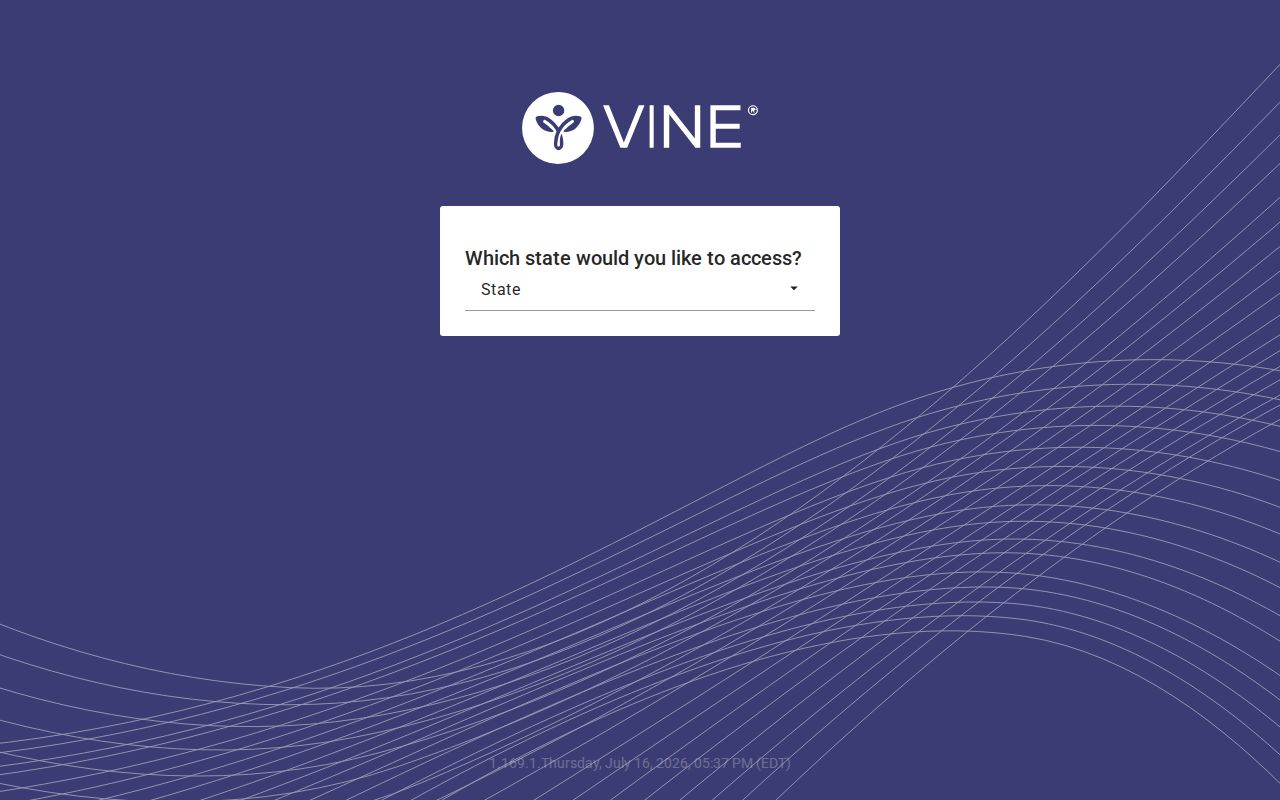
Selecting Kansas starts the query, but participation still must be assessed from the individual result and supplying agency.
Ottawa can refer both to this Kansas county, whose seat is Minneapolis, and to the City of Ottawa in Franklin County. Confirm “Ottawa County” rather than treating every Ottawa result as local. When Mitchell appears, remember that hosted custody can be part of an Ottawa case even though the person is physically in Beloit.
What Ottawa VINE Results Show
A live result should be read as a time-stamped agency report. Available fields can differ, and no arbitrary real person was used in the research to manufacture a sample. Focus on the fields that establish identity, source, and event meaning. Do not infer missing facts.
| Field | How to use it | Limit |
|---|---|---|
| Name and identifiers | Match the intended person with more than one fact | A name alone can select the wrong person |
| Supplying agency or facility | Identifies who reported the custody event | Does not exclude another custodian |
| Custody status | Preserve the exact current wording | Status may lag agency processing |
| Event and timestamp | Shows what the supplier reported and when | Release may be followed by pickup or transfer |
| “As of” time | Marks the freshness of the displayed information | It is not a promise of real-time updating |
| Photograph, if offered | Supports identity matching | May be absent or older than the event |
| Notification options | Shows available channels for that record | Channels differ by state and facility |
If “released” remains visible, record the exact event and supplier. Then ask whether the reported departure was to the community or to another authority. A transfer notice means continued custody. A simple no-match carries much less weight than an affirmative, dated event.
Register Ottawa Release Notifications
Open the correctly matched record before registering. VINE offers only the channels enabled for that record and configuration. Official support material describes email, SMS, telephone, or TTY as possible methods and recommends more than one where available. Exact Kansas options must be checked in the live interface.
- Choose registration or notifications from the matched person’s record.
- Select one or more offered channels. Using two methods can reduce the effect of one missed message.
- Enter each telephone number or address accurately.
- Create the requested four-digit PIN. For telephone or TTY calls, enter the PIN followed by the pound sign when prompted to acknowledge the event.
- Complete any email or text verification code shown by the interface.
- Save the confirmation, keep the PIN private, and update registration details when contact information changes.
An answered call without the correct PIN may not count as acknowledged. Retry behavior depends on the state setup. SMS handling can also require a PIN. A verified account may manage multiple registrations and may offer a universal PIN, but the live account controls govern.
Registering does not create or alter a custody record. It asks VINE to pass along eligible events received from the supplying agency. Preserve the confirmation so a failed alert can be distinguished from an uncompleted registration.
No Ottawa VINE Match
A no-match does not prove release. It can result from spelling or identifier error, agency nonparticipation, protected or offline data, delayed intake, transfer, different custody, or expiration of a recent record. Search a known ID where possible, retry careful name variants, and confirm that Kansas and the correct agency are selected.
Next, follow the custody chain. Call Ottawa County Detention Center at 785-392-2157 with the full name, approximate booking date, and another identifier if needed. Ask whether the person was released to the community or transferred, plus the recorded date, destination, and releasing authority. If Ottawa identifies Mitchell County Jail, call 785-738-3523 and ask whether the person remains there or departed.
For a state sentence, search KASPER. “Inmate” means state custody; parole, conditional release, or postrelease may indicate community supervision; “Discharged” means the KDOC obligation ended. Inspect movements because one institution replacing another is not release. KASPER updates each working day, so a weekend event can precede the public status.
Search the Kansas District Court Public Access Portal for Ottawa County bond, disposition, sentencing, revocation, and discharge entries. A court order establishes legal authority, while the facility’s departure record supplies the custody timestamp. The Ottawa County released-inmate search combines those sources when VINE alone is inconclusive.
Verify Ottawa VINE Release Events
A release notification means the supplying agency reported that event. It does not identify every hold or guarantee that the person entered the community. Ask the agency whether departure was release, transfer, remand, or pickup by another custodian. “Remand” means a court sent the person into custody; a detainer is another authority’s request or basis to hold or receive the person.
For a citable county record, send a focused Kansas Open Records Act request to Ottawa County Sheriff, 312 N. Ottawa, Minneapolis, KS 67467, at sheriff@ottawacounty.org or jail@ottawacounty.org. Identify the person and date range. Request the existing booking, movement, and release entry, including booking number, departure time, release type or transfer destination, authority, and case number. Ask for existing fields rather than a new report.
When Mitchell created the relevant custody event, direct the custody question to Mitchell County Jail, 1716 N. Hersey, P.O. Box 338, Beloit, Kansas, at mcjail@nckcn.com. Ottawa or the court may still hold the committing or releasing authority. Each office can confirm only the record it created.
Under K.S.A. 45-218, a Kansas records custodian must act as soon as possible and no later than the end of the third business day. That deadline requires a response, not universal completion. The agency may explain a delay and provide the earliest practicable production time. K.S.A. 45-219 permits reasonable actual-cost fees and advance payment.
VINE Versus Ottawa Other Records
The KBI Registered Offender Search is a different post-release channel for qualifying sex, violent, and drug offenders. A registrant may appear while living in the community, but registry presence does not prove a recent Ottawa County jail release. Absence does not prove incarceration or discharge. Use the registry only within its statutory scope.
KASPER answers a different question too. It can show a KDOC state sentence, current state custody, parole office, postrelease status, movements, an Anticipated Release Date, or discharge. It does not certify an Ottawa-only jail event. For a county booking, Ottawa’s facility record and the court case remain the primary proof.
The BOP locator covers federal inmates released after 1982 and may show a past actual or future projected Release Date. ICE’s locator addresses immigration custody. Neither belongs inside a Kansas VINE inference. A person absent from VINE may simply be in a system VINE does not cover.
Keep a simple event log when notifications matter: registration confirmation, matched agency, displayed “as of” time, alert time, and the later facility or court confirmation. Keep each timestamp in its original time zone and wording. That sequence shows what VINE reported and what the originating records ultimately established.
Use VINE for its strongest task: tracking one correctly matched record and receiving notices from its supplier. Use the facility, court, KASPER, BOP, or ICE record to explain what happened next. This layered check keeps a prompt alert from being mistaken for a complete custody history.